
Running a Sex Offender Check in Westmoreland County
The Pennsylvania State Police Megan's Law Public Website is the official statewide source. Filter County to Westmoreland for a broad local list, choose a municipality for a focused view, enter a name when checking a known person, or use an address and radius for nearby registration data. PSP maintains the registry. Approved registration sites process changes and verification rather than a general sheriff records counter.
The official interface also supports email notification around a designated address. For a person or place outside Pennsylvania, use the U.S. Department of Justice national search as a second layer. Exact portal controls can change, so confirm the live labels before relying on saved steps.
Westmoreland County PSP Registry Interface
The PSP Megan's Law Public Website separates search modes instead of treating the registry as one name list.
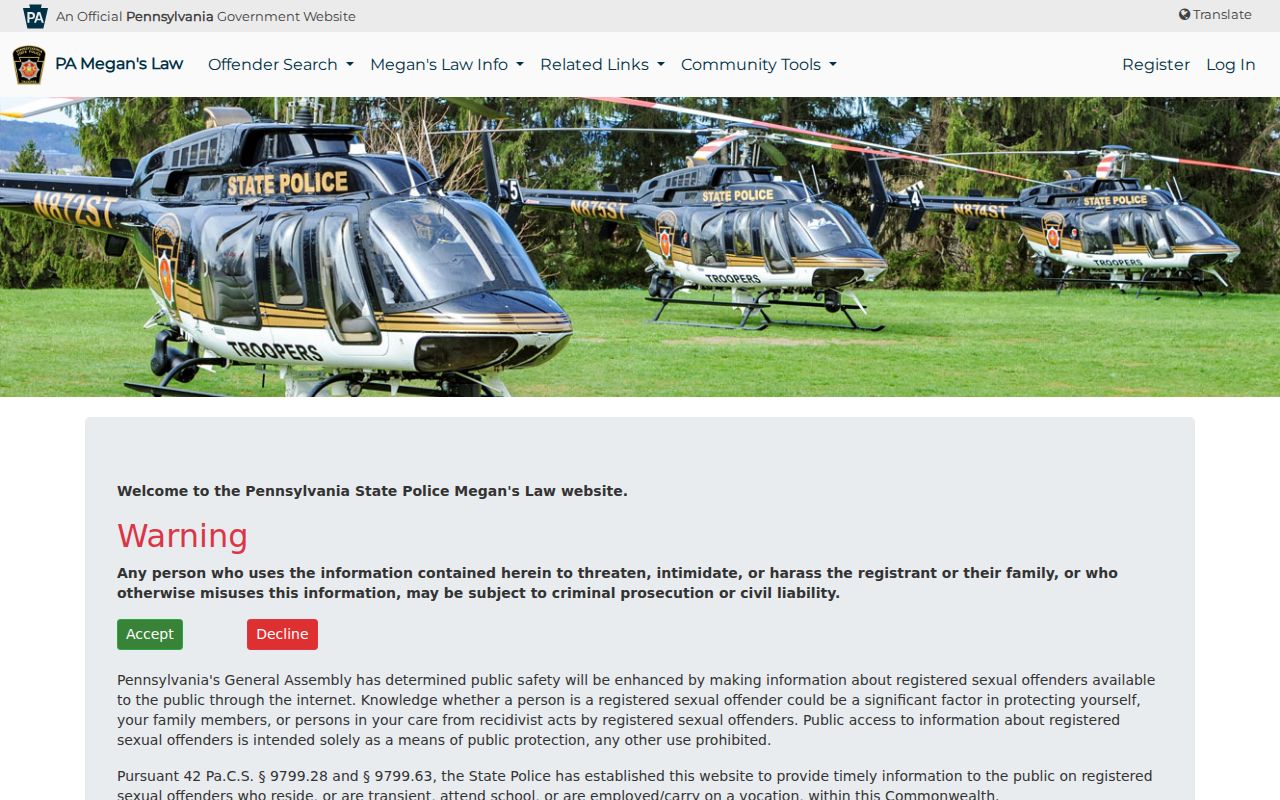
That choice lets a Westmoreland County resident search for a named person, scan a county or municipality, or examine an area near an address without reproducing any registrant's data here.
Searching the Pennsylvania State Police Megan's Law Public Website
Start with the smallest set of facts that answers the question. A county search gives breadth. A municipality or ZIP narrows the result. A surname works best with a first name, while an address search is the right tool for neighborhood awareness. Review the site's conditions before opening profiles.
- Open the official PSP registry and accept its conditions of use.
- Choose name, county, municipality, or ZIP/address/proximity search.
- Select Westmoreland County or enter the local place, name, or designated address.
- Review the result list, then open a profile for public registration and compliance details.
- Use email notification when ongoing changes within the chosen radius matter.
The county-search screen illustrates the local filter. Open the official Westmoreland County search to use current controls.
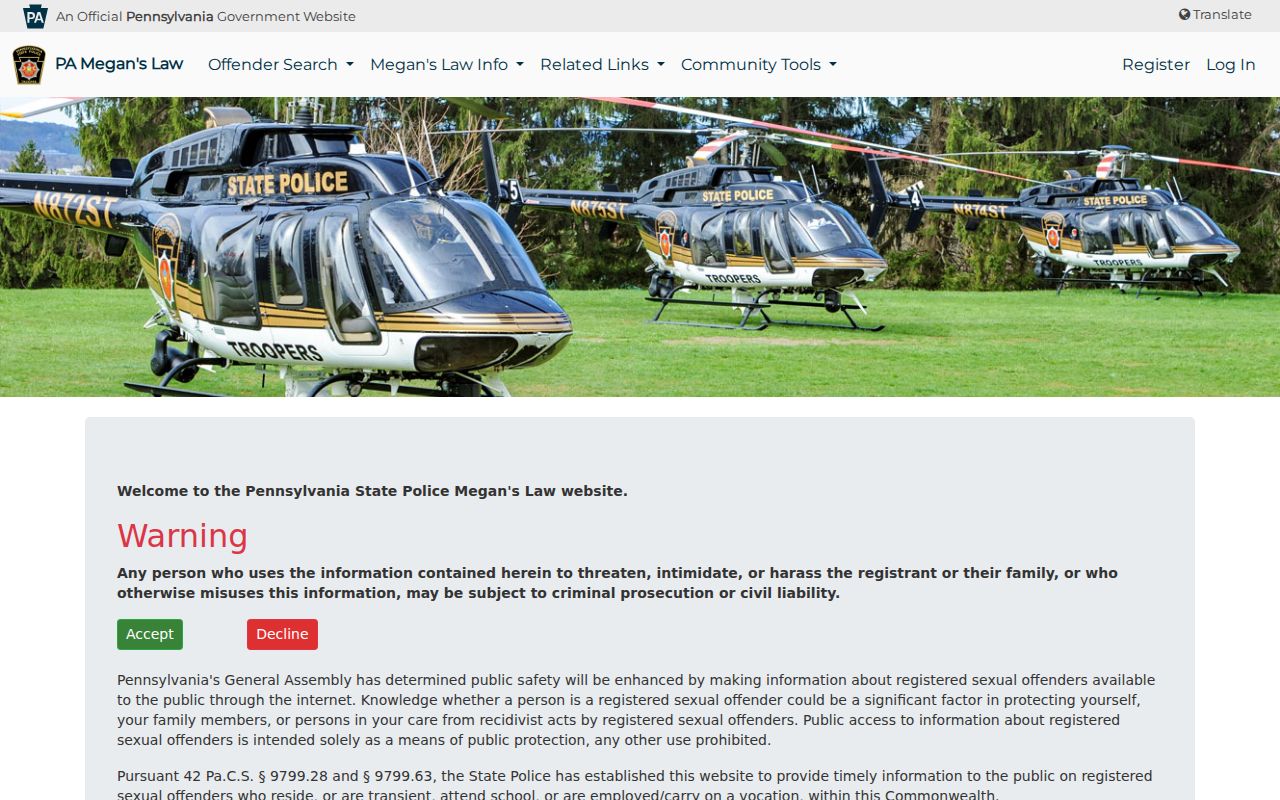
The available fields support several distinct safety questions.
| Field Label | Type | Required | Notes |
|---|---|---|---|
| Last name | Text | For name search | Add first name to narrow |
| First name | Text | No | Helps match a known person |
| County | Dropdown | For county search | Select Westmoreland |
| Municipality | Select or text | No | Narrows to a locality |
| Street, city, or ZIP | Text | For proximity | Locates the designated address |
| Radius and email | Select/workflow | No | Alerts may cover up to five miles |
Westmoreland Five-Mile Registry Alerts
PSP's notification service can email changes near a designated Westmoreland County address. Covered events include a registrant moving into or out of the radius, or starting or ending work or school there. The radius may extend up to five miles. It is an update tool, not a guarantee that every risk or offense near the address appears in the registry.
The official Megan's Law questions and alerts page explains notification and public-use limits.
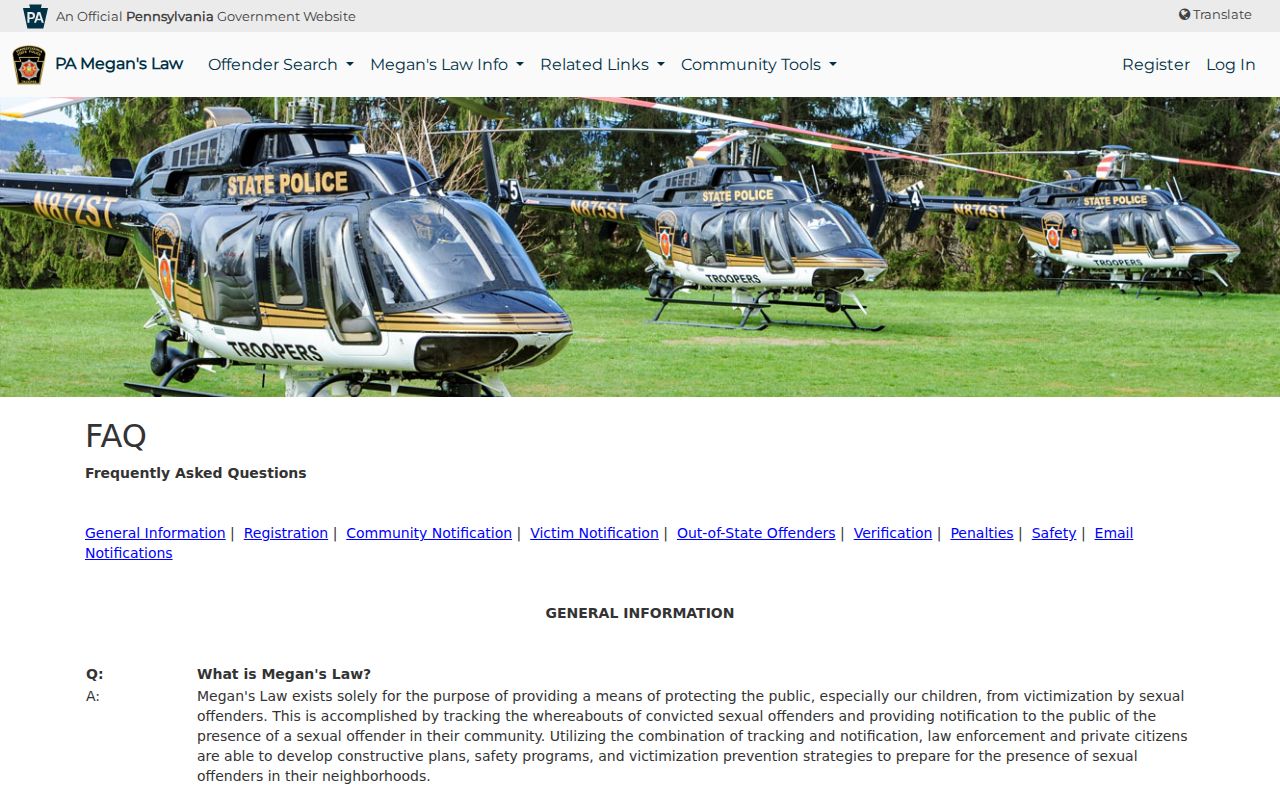
For ongoing community awareness, alerts are more useful than repeatedly saving an old Westmoreland County result list.
The alert radius and a county list serve different needs. Selecting Westmoreland County produces a broad local search, while a designated address supports notice about covered changes within the chosen area. PSP describes alerts for moves into or out of the radius and for the start or end of work or school there. An email is a prompt to open the current official profile. It should not replace the live record, since a saved message cannot show later corrections, changed registration details, or the full context displayed by PSP.
No notification system is a list of all local danger. Pennsylvania's registry includes people who meet statutory registration and public-display rules. It does not include every person convicted of any offense or every person who could present a safety concern. Westmoreland County families can use the search and alert tools as one part of a broader safety plan, then report suspected noncompliance to PSP or local law enforcement. Direct contact, public accusations, and harassment are not proper ways to resolve a question about a profile.
What a Registry Profile Shows
A public profile joins identity, current registration details, qualifying offense facts, and compliance information. It does not expose every law-enforcement field or replace the court docket. Public visibility comes from Pennsylvania Chapter 97, not from a general rule that all criminal records are open.
| Name and aliases | Public names and aliases used to identify the registrant |
|---|---|
| Photo and description | Image, age or birth data, physical traits, scars, marks, and tattoos |
| Location information | Residence or transient data plus work or school information made public by law |
| Offense | Description, statute, conviction or adjudication date, and jurisdiction |
| Classification | Tier or other registration class and related registration status |
| Compliance | Verification and compliance information shown in the public system |
Westmoreland Registry Residence Rule Myth
Pennsylvania's official FAQ states that Megan's Law itself does not impose a statewide distance rule that bars every registrant from living near a school or park. Do not invent a Westmoreland County buffer. A registry map shows reported public locations; it does not decide whether an address is lawful under every separate court order, supervision term, or local rule.
This distinction keeps a proximity result in context. Use it for safety planning and awareness. Questions about a specific person's legal conditions belong with the supervising or registering authority, not with assumptions drawn from the map.
Registration Requirements and Levels in Pennsylvania
Pennsylvania tier and legacy categories set both duration and routine verification. Tier I, II, and III are not informal risk scores. They are legal classifications tied to registration duties. Transient registrants verify more often, while several legacy and special categories follow their own schedule.
| Level / Tier | Duration | Verification Frequency |
|---|---|---|
| Tier I | 15 years | Annually |
| Tier II | 25 years | Semiannually |
| Tier III | Lifetime | Quarterly |
| Legacy ten-year | 10 years as applicable | Annually |
| Legacy lifetime | Lifetime | Annually |
| Sexually Violent Predator | Lifetime | Quarterly |
| Transient registrant | Underlying period | Monthly |
The PSP registration rules page lays out the tier and reporting duties.
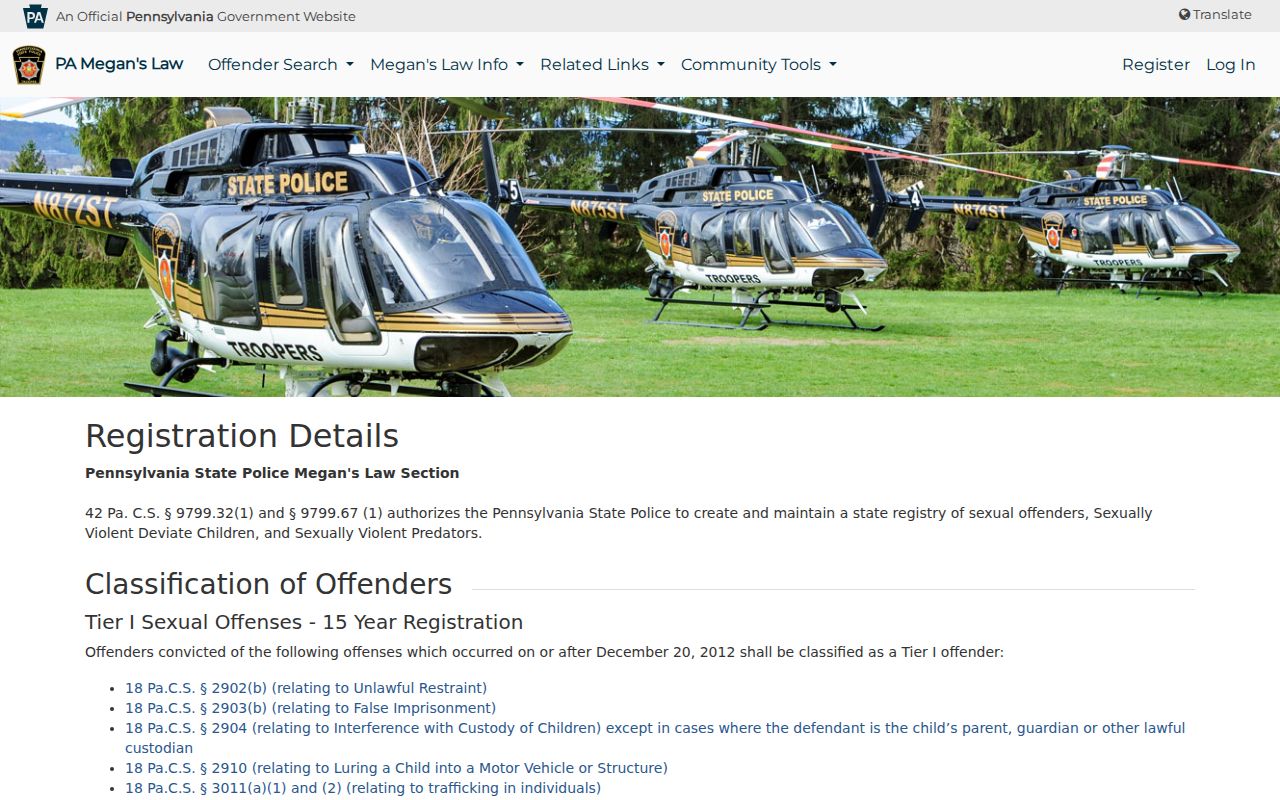
Eligible Tier II or III registrants who meet stated conditions may complete some periodic checks by phone after the first three years, but they still report in person at least once each year.
Westmoreland Registration Change Reporting
For cases covered by the post-December 20, 2012 rules, changes to a name, residence or transient status, work, school, or telephone generally must be reported in person within three business days. Approved registration sites handle those updates. Because a stable county-specific registration address was not exposed in the official research, use the registry's Registration Sites finder and confirm the current Westmoreland County site and hours before travel.
Suspected noncompliance should go to PSP or local law enforcement. Failure to comply and knowingly inaccurate registration can be crimes under 18 Pa.C.S. § 4915.1. Members of the public should report facts rather than investigate, confront, or publish personal claims.
Westmoreland Search and NSOPW
The PSP registry is the authoritative Pennsylvania channel. The National Sex Offender Public Website adds a cross-state search maintained through the U.S. Department of Justice.
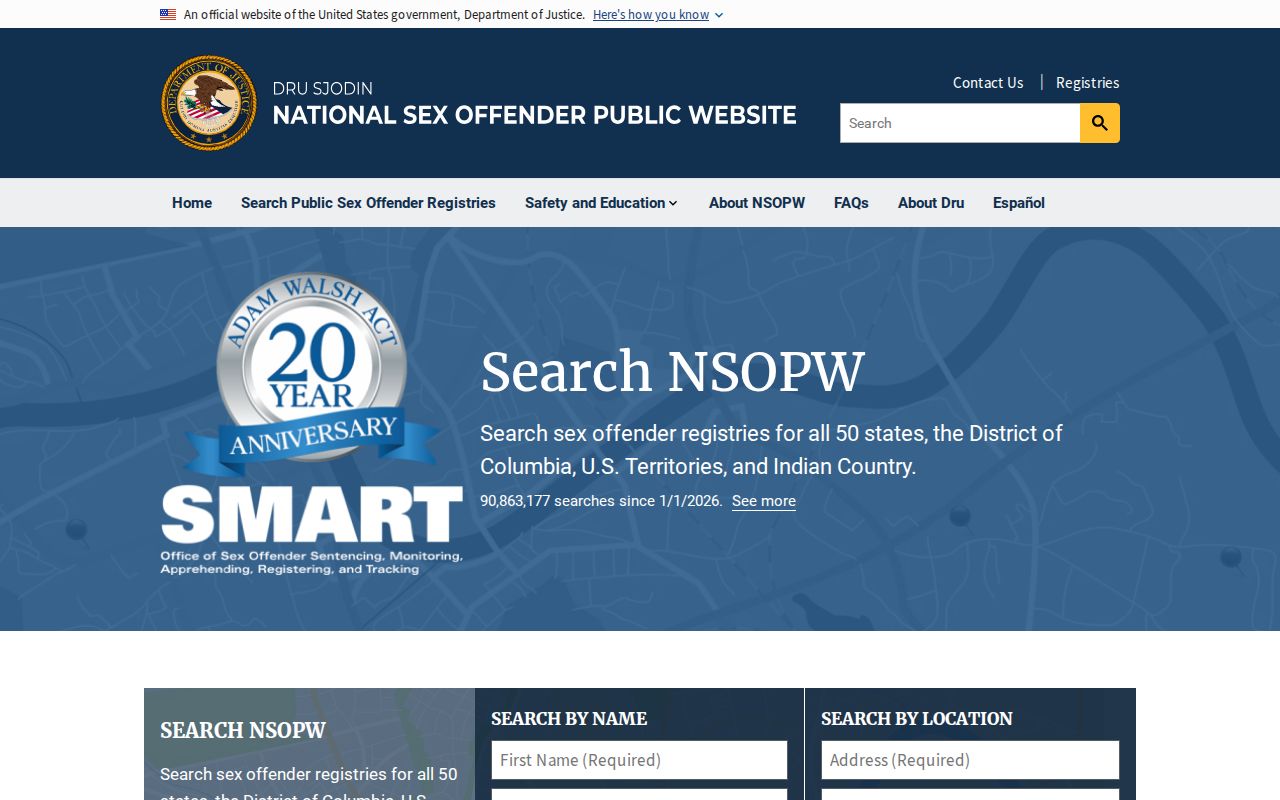
Use NSOPW when a person or address concern crosses state lines, then return to the linked jurisdiction's official profile for current details. For a Westmoreland County-only question, PSP's county and proximity tools give the more direct local filter.
Lawful Use and Community Notification
Registry data supports family safety, neighborhood awareness, and informed plans. Pennsylvania recorded 24,137 registrants and 3.3 million public-site visits in the 2024 PSP annual report, but those statewide totals are not a Westmoreland County crime rate. A listing also is not a forecast of conduct. Read the public facts, use alerts, and call law enforcement for suspected noncompliance or an urgent safety concern.
Misuse is unlawful: Pennsylvania registry information is governed by 42 Pa.C.S. Chapter 97. Threats, intimidation, harassment, or vigilante acts may violate Pennsylvania criminal law. Report suspected violations to PSP or local police.
The registry also has limits that good safety planning should keep in view. It covers people who meet Pennsylvania's registration rules and public-display criteria. It does not list every person with a sex-offense case, every past resident, or every person who may pose a risk. A profile can change when PSP receives a verified update, so a saved image or printed list can grow stale. Return to the live Westmoreland County search before acting on location or compliance details.
When information seems wrong, note the profile and the disputed field, then report the concern through PSP or local law enforcement. Do not try to correct it through social media or direct contact. Police can compare registration submissions with official records and determine whether a change is late, a display is still updating, or the public has misunderstood a field. That route protects both community safety and the integrity of Pennsylvania's registration process.