
How to Check Criminal History in New Kensington
Choose a New Kensington source by record type. City police are responsible for reports made by their officers. UJS dockets show local court proceedings. Westmoreland County Prison shows current county custody, while Pennsylvania State Police supplies the statewide repository response. A police narrative, booking entry, docket, and rap sheet describe different stages. Comparing them is often the soundest route when someone reviews their own New Kensington record or follows a known event.
Use these five steps to search New Kensington records through the official chain:
- Confirm that New Kensington Police Department, rather than Pennsylvania State Police or another agency, handled the incident.
- Request the city incident record and provide the incident number, approximate date, location, and specific document sought.
- Search UJS Magisterial District Court dockets under Westmoreland County for the complaint, bail, and preliminary stage.
- Check the county prison roster for current custody and follow held-for-court charges into a CP-65 Common Pleas docket.
- Use PATCH or PSP Individual Access and Review when a Pennsylvania repository record is the real goal.
New Kensington Police Incident Records
A New Kensington incident report contains the city officer's account and related event details. It is not the same as a docket sheet. The report may identify the incident number, time, place, people involved, alleged conduct, and police action. Investigative text, victim data, evidence, and protected personal information may be withheld. A court docket instead lists filed charges, bail, hearing events, and disposition without reproducing the police narrative.
Make the New Kensington request specific. State the incident number if known, then add a date range, location, involved city division, and the exact record needed. Ask for inspection or copies rather than demanding every record tied to a broad name. The official city police office is the proper starting point for a record created by New Kensington officers. County offices cannot release the city's own narrative merely because later booking or prosecution occurred at county level.
The New Kensington Police Department
New Kensington Police Department and the city's Open Records Officer are the proper custodians for city-created incident records. The official New Kensington police page should be used to confirm the station address, records phone, and counter hours before a visit or request. The available official research did not yield a stable detailed contact block, so no unverified street address, number, or schedule should be used.
This limitation does not change the routing rule. Do not send a New Kensington police report request to Greensburg Police Department or to the Westmoreland County Sheriff. The sheriff manages courthouse security, transport, civil process, and warrants. It does not become custodian of every city police narrative. If the incident was handled by Pennsylvania State Police, use PSP records-request channels even when the event occurred near New Kensington.
New Kensington Police or PSP Records
Geography alone does not identify the record holder. New Kensington police keep reports created by city officers. Pennsylvania State Police keeps reports from PSP incidents. The agency name on a citation, complaint, crash exchange, or UJS docket can resolve the issue. When that document is unavailable, provide the exact street, date, and event description to the official city police office and ask whether it has the incident number.
| Event Source | First Record Channel | Record Expected |
|---|---|---|
| New Kensington officer | City police or city Open Records Officer | City incident or arrest report |
| Pennsylvania State Police trooper | PSP statewide records request | PSP incident, arrest, or crash record |
| Filed criminal complaint | UJS Magisterial District Court search | Court docket and hearing history |
One event can involve more than one row. The police report remains with the arresting agency even after county booking and court filing add their own records.
Arrests and Bookings in New Kensington
New Kensington does not publish a separate public city jail roster. A custodial arrest by New Kensington police is booked through Westmoreland County Prison. The county's current inmate search gateway is therefore the local custody source. It can show a current entry and linked charge information, but it is not a complete New Kensington arrest archive. It also does not contain the city police narrative or prove that an allegation led to conviction.
Initial charges can change after booking. A prosecutor may amend, withdraw, or replace them, and a court later records the result. Use the current roster for present custody, the New Kensington police channel for the local incident, and the UJS docket for filed charges. These sources can update on different schedules. Very recent activity may reach the city and county systems before every court entry appears.
Note: A New Kensington arrest is not proof of guilt, and the court disposition is the source for the final result.
When New Kensington Booking Is Missing
A blank county roster result does not establish that no New Kensington arrest occurred. The person may have been released, cited without a continuing jail stay, transferred, or booked under information that does not match the search term. The county interface reflects current custody rather than a permanent city log. Start by checking the spelling and then use the first letter of the last name or the “All” option where available.
If the New Kensington event is no longer current, search UJS for the court record and contact the city police custodian with the incident number. An MDJ docket can remain available after a person leaves custody. A case held for court may instead be found under a CP-65-CR number in Westmoreland County Common Pleas. For broader county custody context, the Westmoreland County arrest record channels explain how booking, police, and court files differ.
New Kensington Municipal Court Records
New Kensington local cases enter Pennsylvania's Magisterial District Court system rather than a stand-alone city municipal court. The lower court handles traffic and summary cases, preliminary arraignment, bail, and preliminary hearings. Open UJS Public Web Docket Sheets, choose Magisterial District Courts, set County to Westmoreland, and search by participant or docket number. The correct court office can be confirmed from the resulting docket.
| Court Name | Westmoreland County Magisterial District Court serving the New Kensington incident |
|---|---|
| Case Types Heard | Traffic, summary matters, criminal complaints, bail, and preliminary hearings |
| Case Lookup Channel | UJS Public Web Docket Sheets or the court office identified on the docket |
| What the Docket Shows | Docket number, arresting agency, charges, bail, events, hearing activity, and disposition |
| Copies & Fees | Online public docket viewing is free; ask the court about certified-copy costs |
A public docket may contain delayed or incomplete entries. It is not a PSP background check and does not reproduce New Kensington investigative details.
New Kensington Cases Held for Court
When an MDJ holds New Kensington charges for court, the case moves to the Court of Common Pleas of Westmoreland County, Criminal Division. The Common Pleas record receives a CP-65-CR number. It can show the formal information, motions, pleas, trial activity, disposition, sentence, and financial ledger. “Held for court” only means the lower-court process sent charges forward. It is not a conviction.
Use the originating MDJ docket reference and participant name to locate the later file. If the Common Pleas entry is hard to find, contact the Clerk of Courts criminal counter in Greensburg with both docket identifiers. The county court file should be used for the final charge and outcome. The earlier New Kensington booking entry can retain initial allegations that do not match the final prosecution.
Where New Kensington Records End Up
New Kensington police create the city report. Westmoreland County Prison creates a booking entry after custodial intake. A Magisterial District Court records the complaint and first proceedings, and the Common Pleas court maintains a case held for court. Courts and clerks then report qualifying dispositions to the Pennsylvania State Police Central Repository. No single New Kensington search displays every layer.
Record flow: New Kensington Police Department › Westmoreland County Courts › Pennsylvania State Police Central Repository
Use city police for a local narrative, county systems for custody and the formal case, and PSP for repository history. A person reviewing their own record should use PSP Individual Access and Review, then compare any disputed arrest cycle with the docket. Missing or late court disposition data can make the repository and court results differ until the reporting agency corrects them.
New Kensington Record Geography
New Kensington is an Allegheny River industrial city with an estimated population around 11,600. Its separate police jurisdiction distinguishes it from county-seat Greensburg and suburban Murrysville. That local identity matters in a records search. A New Kensington street incident belongs with the city only when New Kensington officers handled it. Nearby PSP activity stays with the state police.
The city has no separate public jail search, so custody moves outward to Westmoreland County. Court information follows another route through the MDJ and Common Pleas systems. This creates a three-level pattern: city narrative, county custody and prosecution, then state repository reporting. Giving an exact place, date, and incident number helps each office decide whether it owns the requested New Kensington record.
Public Access Rules
The Pennsylvania Right-to-Know Law governs requests for New Kensington city agency records, but it preserves exemptions for criminal-investigative information and protected data. Court dockets follow UJS public-access rules. Pennsylvania's Criminal History Record Information Act controls repository dissemination, correction, expungement, and limited access. A requester should therefore use the city open-records route for city executive records, UJS for dockets, and PSP for statewide criminal history.
The Pennsylvania Office of Open Records overview explains the statewide Right-to-Know process.
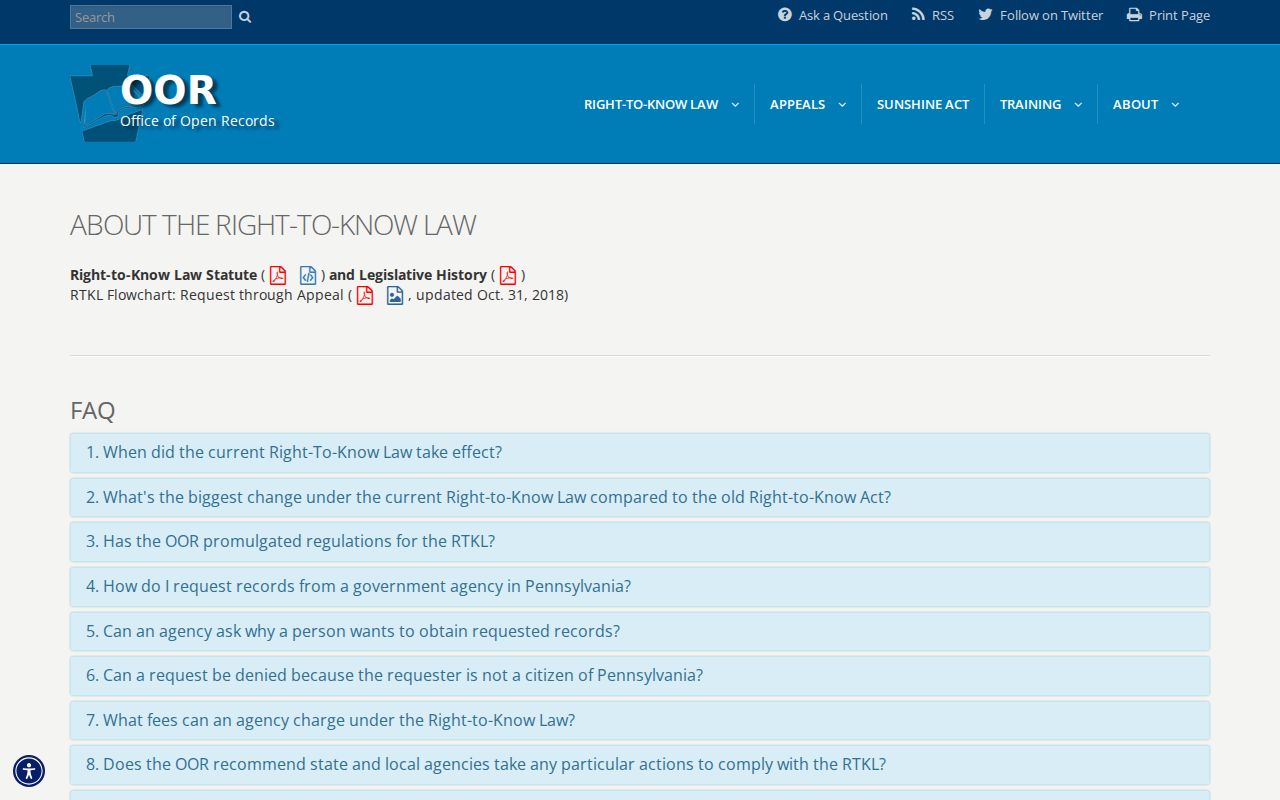
The statewide overview helps classify an ordinary agency request, but it does not turn protected police material into a public record or replace judicial access rules.
Key Statutes:
Pennsylvania Right-to-Know Law creates access rights for agency records while retaining stated exemptions.
18 Pa.C.S. Chapter 91 governs criminal history dissemination, correction, expungement, and limited access.
UJS Public Access Policy sets rules for judicial case records and protected court data.
When New Kensington Charges Change
A New Kensington booking may list the charges delivered at intake, while the MDJ complaint reflects what was filed at that stage. The prosecutor can later amend or withdraw a count. A Common Pleas information may frame the prosecution differently, and the final docket records the outcome. None of these changes makes an earlier city or booking record fraudulent. Each record captured a different stage.
When the results conflict, write down every docket and incident number. Compare the charge statute, filing date, and disposition on UJS. Then obtain the New Kensington report only if the narrative is needed. A person correcting their own Pennsylvania repository history should order PSP Individual Access and Review and support a challenge with court proof. The agency that reported bad data must correct its own submission and notify the repository when an inaccuracy is found.
Do not infer the outcome from the county roster. Release can result from bail, sentence completion, transfer, or another custody change. The Common Pleas or MDJ disposition remains the official source for what happened to the New Kensington charge.